


Ultimate Wellness & Athletic Performance Blood Test
Ultimate Wellness & Athletic Performance Blood Test
Couldn't load pickup availability

Product Specifications
Details
Are you planning an elite body transformation, preparing to embark on an intense athletic training programme, or simply searching for the gold-standard annual MOT for your body? Stop relying on basic health checks that only look at surface-level metrics. To truly optimise your longevity, physical power, and everyday energy, you need to understand your biology at a cellular level.
The Optimal You Ultimate Wellness & Athletic Performance Blood Test is our most comprehensive clinical health screen ever. Analysing an extraordinary 56 key biomarkers, this premium panel serves as your definitive internal health dashboard. It seamlessly bridges the gap between deep preventive medicine and high-level sports performance tracking, giving you a total biological overview of your endocrine, metabolic, cardiovascular, and immune systems.
From checking how your organs are filtering waste to mapping the delicate ratios of stress and sex hormones that govern your muscle recovery, this elite screen leaves absolutely nothing to chance.
Key Core Benefits
Ultimate 56-biomarker gold-standard MOT
Advanced hormones & athletic recovery metrics
Complete organ, thyroid & metabolic review
Deep nutritional & vitamin deficiency tracking
Bespoke UK doctor report with clear guidelines
The Elite Health Advantage: What Can You Learn?
Our medical team have curated this 56-biomarker profile to investigate the vital pillars of human performance and longevity:
🔄 Performance Hormones & Adrenal Recovery
This test features an advanced hormone panel designed to measure the delicate balance of sex and stress hormones in your body. Alongside Total Testosterone, Oestradiol, FSH, and LH, we calculate your biologically active Free Testosterone to see how much hormone is actually available to your cells.
For athletes and fitness enthusiasts, this test calculates the Testosterone-to-Cortisol (T:C) ratio. Testosterone is an anabolic hormone that helps build muscle and red blood cells, whilst Cortisol is a catabolic hormone that inhibits protein synthesis. Trending this ratio over time is one of the most effective, clinically proven ways to monitor training recovery, detect overtraining syndrome, and ensure your body is in an optimal state to make physical gains.
🦋 Comprehensive Thyroid & Autoimmune Diagnostics
Many general practitioners only check Thyroid-Stimulating Hormone (TSH) when investigating fatigue or weight issues. This panel delivers a full thyroid evaluation—including Free T3 and Free T4—alongside specific Thyroid Antibodies (Thyroglobulin and Thyroid Peroxidase). This allows our clinical team to screen for hidden autoimmune thyroid conditions, such as Hashimoto’s or Graves' disease, which can silently compromise your metabolism and muscle retention.
🫀 Heart, Blood Sugar & Diabetes Prevention
A simple fasting glucose test only shows a transient snapshot of your blood sugar. We measure HbA1c (Glycated Haemoglobin) to evaluate your average blood sugar levels over the past three months. This is crucial for catching pre-diabetes and metabolic syndrome early, protecting you against long-term vascular, renal, and heart health issues. We pair this with a high-sensitivity C-reactive protein (hs-CRP) test to detect low-level systemic inflammation that can damage blood vessels, alongside a detailed 6-marker cholesterol lipid breakdown.
The 56 Biomarkers Analysed
Our accredited UK laboratories cross-reference 56 distinct biological markers to construct your ultimate health profile:
📋 Essential Pre-Test Instructions
To guarantee absolute clinical accuracy and ensure your 56-biomarker profile reflects your true biological baseline, please follow these preparation protocols closely:
Timing, Rest, & Stress Management
- Morning Blood Draw: You must collect your sample early in the morning between 6am and 10am. This tight window is essential for accurate cortisol, prolactin, and testosterone metrics.
- Physical & Sexual Rest: Avoid heavy exercise, intense training, or sexual activity for 48 hours before taking your test. These variables artificially elevate prolactin, cortisol, and liver enzymes.
- Avoid Physical Stimuli: Refrain from nipple stimulation in the lead-up to your blood draw, as this can cause prolactin levels to surge.
- Illness Recovery: Wait to take this test until any active symptoms of a short-term or acute illness have completely settled.
- Sleep Patterns: If you work shifts or have an irregular sleep cycle, collect your sample within 2 hours of waking and log this in your supporting information.
Nutrition, Fasting, & Hydration
- Fasting Encouraged: Whilst not strictly compulsory, taking this test fasted is highly preferable as eating can artificially impact prolactin levels.
- Stay Well Hydrated: Drink plenty of plain water before your appointment to ensure your blood is flowing smoothly.
Medications, Supplements, & Cycle Timing
- Vitamin B12 Restriction: Do not take any Vitamin B12 supplements for two weeks prior to this test. If B12 is medically prescribed, consult your doctor before pausing it.
- Biotin Restriction: Avoid taking biotin supplements for two days before your test.
- General Supplements: Ensure a minimum gap of 24 hours between your last standard vitamin or mineral supplement dose and your blood draw.
- Corticosteroids: Corticosteroid medications heavily impact your hormone readings; please ask your doctor whether it is safe to temporarily stop taking them before testing.
- Thyroid Medications: If you take levothyroxine or desiccated thyroid extract (DTE), collect your blood sample before taking your daily dose. If you must test later in the day, leave at least six hours after taking levothyroxine (or 12 hours after DTE/T3 medications). Please declare if you take amiodarone or lithium.
- Menstrual Cycle & Contraception: If you experience periods and are testing to understand your fertility, collect your sample two to five days after your period starts (ideally on day three). If you do not experience periods, you can test at any time. Note that hormonal contraceptives will alter your natural hormone baseline.
How It Works
- Order Your Test: Purchase your test securely online. Because this comprehensive 56-biomarker profile requires a high volume of blood to run all 11 complex health panels, a professional venous blood draw from your arm is highly recommended.
- Choose Your Collection: Arrange to have a professional nurse visit your home for a quick, comfortable draw, or book a convenient appointment at one of our nationwide partner clinics.
- Accredited Laboratory Turnaround: Your sample is securely processed in our accredited UK laboratories. Your extensive health profile will securely upload to your online portal within an estimated 3 to 4 working days.
- Bespoke Doctor's Commentary: Every test is interpreted and medically reviewed by a qualified doctor, providing a highly detailed, personalized, and easy-to-understand report to help you and your trainer implement real, health-enhancing changes.
📊 Advanced Laboratory Note: Most standard testosterone tests cap readings at 52 nmol/L. If your results exceed this detection limit, our lab will automatically attempt a second high-volume measurement to capture an exact reading, provided there is sufficient sample volume available. Additionally, active Vitamin B12 results above 150 pmol/L will be safely displayed on your digital report as ">150 pmol/L".
Biomarkers Tested
How to prepare for your test
-
Your Blood, Your Way
Do at home with our kits or have a professional collection arranged.
-
Extensive Clinic Network Across the UK
Arrange professional blood draws from on of our partnered clinics around the UK
-
Fast & Secure Delivery
Safe and timely delivery of blood test collection kits to your doorstep.
-
Blood Diagnostics, Without The Wait
Fast and convenient blood collection and diagnostics, without having to wait.
How Your Clinic Visit Works
- Find a Location: Enter your postcode in the finder above to discover your nearest approved clinic.
- Book Your Sample Draw: Follow the clinic links sent to you from our partners to confirm your appointment time.
- Bring Your Kit: Attend your appointment with your Optimal You test kit and pre-printed blood sample collection materials.
- Rapid Results: Once drawn, your sample is safely couriered directly to our accredited laboratory network.
Why Choose a Venous Sample Draw?
While finger-prick kits offer convenient home collection, attending an accredited partner clinic for a professional venous sample draw ensures:
- Maximum Biomarker Accuracy: Venous draws yield larger, higher-quality blood samples ideal for complex testing panels.
- Low Risk of Hemolysis: Professional collection by trained phlebotomists prevents sample degradation.
- Painless Experience: Fast and comfortable sample collection conducted by experienced medical professionals.
3 Simple Steps - How to Take Your Test

Step 1
Receiving Your Test Kit
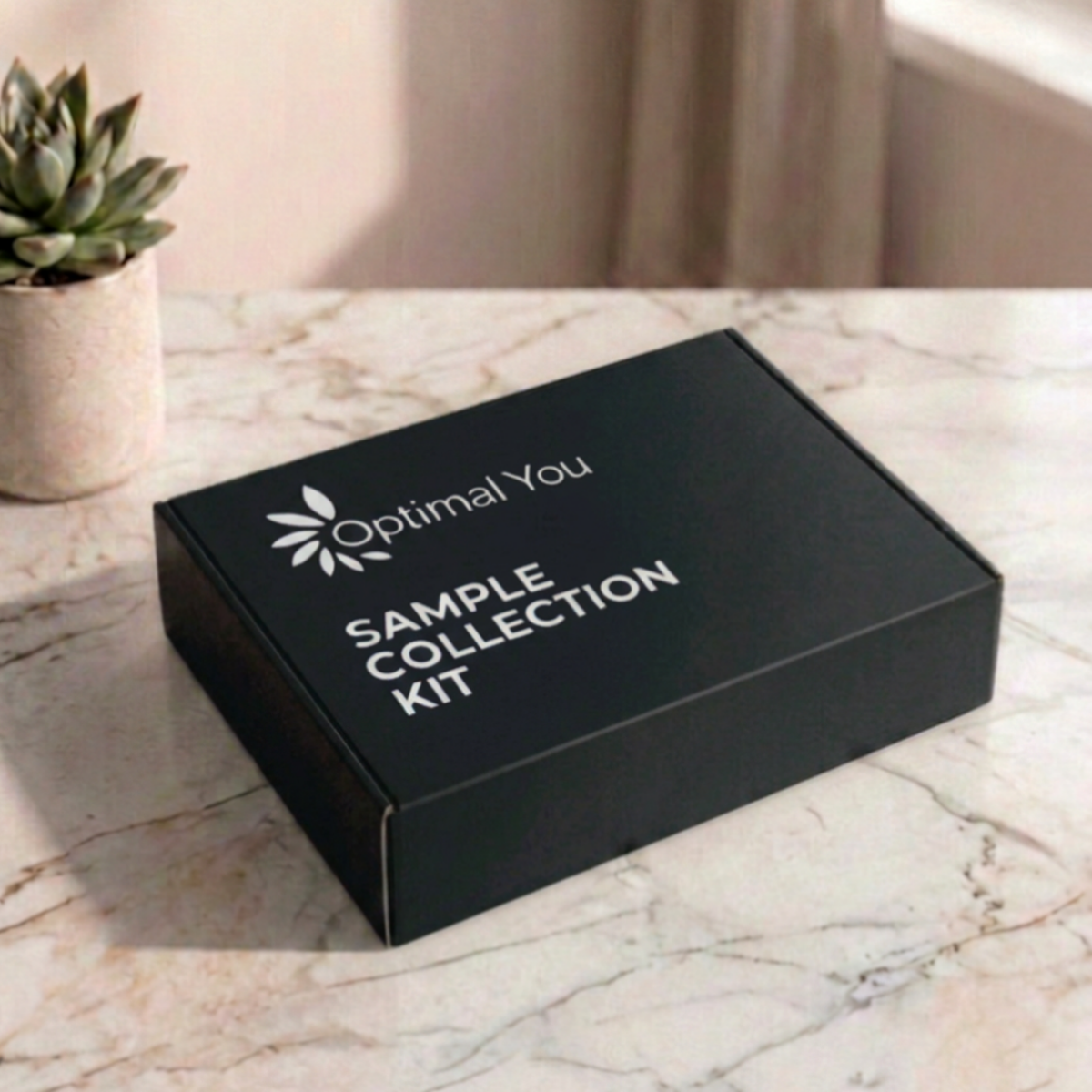
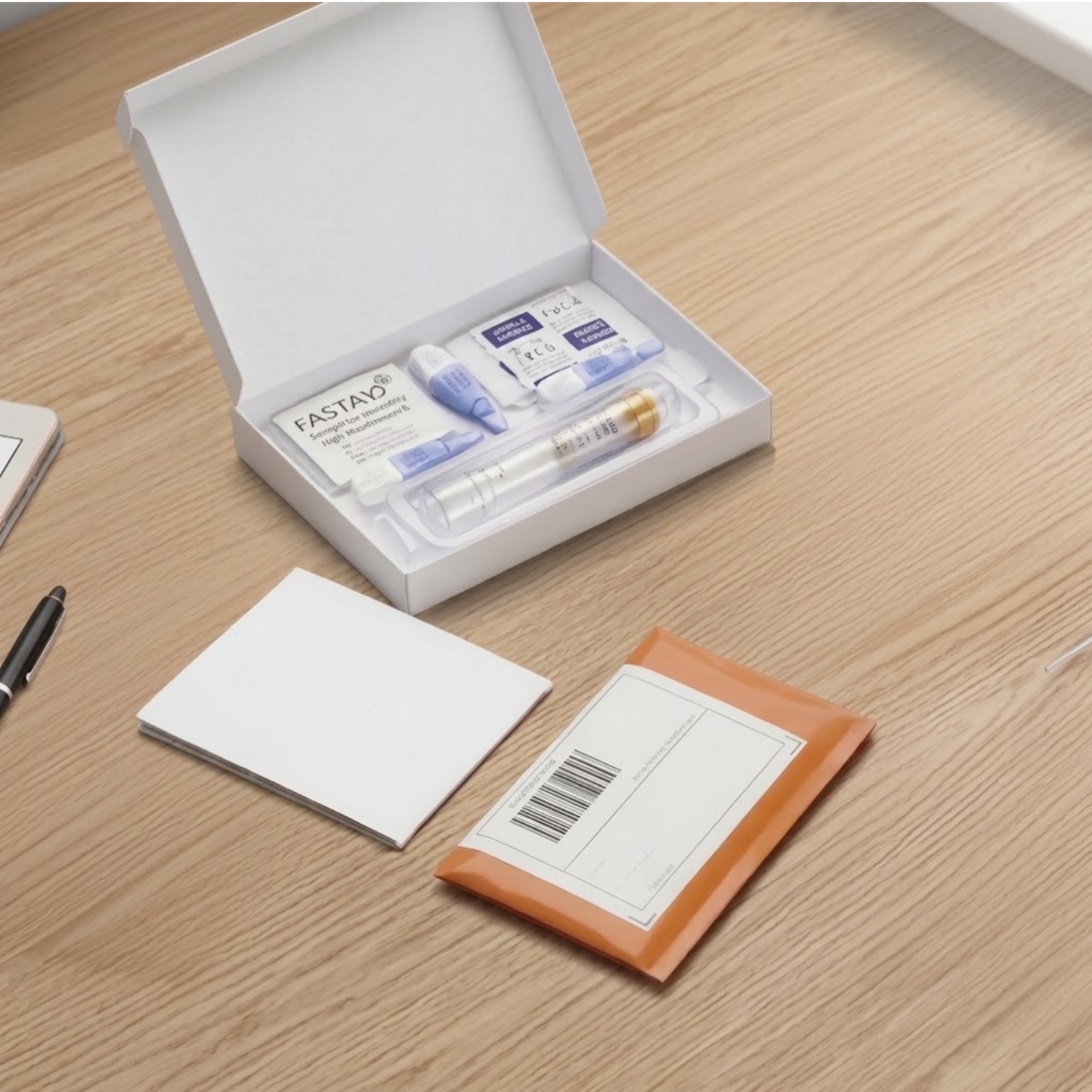
Order your at home finger prict test with Optimal You. You'll receive everything you need within your kit along with pre-paid packaging for you to post your sample directly to our partner laboratory for analysis.

Step 2
Collecting Your Sample
Following the provided guide, use the simple finger-prick method to prick your finger and drip your blood sample directly into the vial.

Step 3
Receiving Your Results
Post your sample to the lab using the prepaid envelope and packaging enclosed. Your results will be securely sent to you via email within 3 working days (estimated)
Frequently Asked Questions
Frequently asked question about our blood testing and diagnostic services. If there is a question not answered feel free to contact us!
Are there any age restrictions for your tests?
Can I book a professional to take my blood?
Can I share my results with my own GP?
Can I take these tests if I am pregnant or breastfeeding?
Can I use these tests to monitor an existing medical condition?
Do I need a doctor’s referral or a prescription?
How do I get started with a blood test?
How long does it take to get my results?
How soon do I need to post my sample back?
Is my data secure?
Is there a specific day or time I should take my sample?
What happens if I struggle to get enough blood from a finger-prick?
What happens if my results are abnormal?
What is the difference between a Finger-Prick and a Venous Draw?
Who reviews my results?
Why are my results different from a previous test I had?

Ultimate Wellness & Athletic Performance Blood Test
